General educational material. Independent engineering approval is not claimed.

| Name | Quantity | Unit |
|---|---|---|
| Area | 50 | m² |
| Coats | 2 | pcs |
| Manufacturer coverage (m²/L) | 10 | m²/l |
| Waste allowance | 10 | % |
| Calculation result | 11 | litres |
An estimate starts with scope
A renovation budget is more than a number at the bottom of a spreadsheet. It identifies the work, measured quantities, inclusions and remaining uncertainties. When quotation totals differ, compare their scope before their prices. One contractor may include surface preparation while another allows only for the final coat.
Separate rooms and work stages: removal, substrate repair, building services, waterproofing, surface preparation, finishes and cleaning. This is not a mandatory list for every renovation. Existing conditions and the intended outcome define the actual schedule.
Build a measurement schedule
Give each item a code, location, description, unit and quantity. Painting may be measured by area, cable by length, fixtures by item and some tasks as a defined package. A package without an inclusion list invites disputes. Prices expressed in different units cannot be compared directly.
Record where each quantity came from: measurement date, drawing version and calculation. Show openings, ceilings and walls separately. Where conditions will only be known after opening up, record a provisional assumption and a remeasurement stage instead of pretending the quantity is exact.
Describe materials before pricing them
Paint is not a sufficient purchasing specification. Intended use, substrate compatibility, manufacturer coverage, coat system, drying conditions and container volume matter. Primer and filler, if required, are separate items rather than an unexplained part of the finish-paint quantity. An agreed sample area can help confirm colour and appearance.
For tiles, record size, packaging, batch and cutting layout. Plumbing fixtures need product models, connection requirements and documentation. Safety decisions in electrical and plumbing work should not be weakened to match a cheap quotation. Comparison is meaningful only for comparable products and the same scope.
A practical paint example
Assume 50 m² of surface will receive two coats. For this illustrative calculation, take 10 m²/L coverage from the selected product documentation and allow an illustrative 10% extra. Preliminary quantity is 50 × 2 / 10 × 1.10 = 11 L. These are not universal requirements: porosity, colour changes and application methods may affect consumption.
Eleven litres does not determine the number of containers. Select a purchasing combination from available package sizes and record the remaining material separately. Where coverage is a range, explain which value you used. Primer or filler quantities cannot be inferred automatically from this result.
Give each price a source
Record currency, date, supplier, region and whether delivery and taxes are included. Do not turn an unknown price into zero. HomeFix marks the total incomplete when unpriced items remain. Zero is appropriate only for a genuinely free item with an explanation.
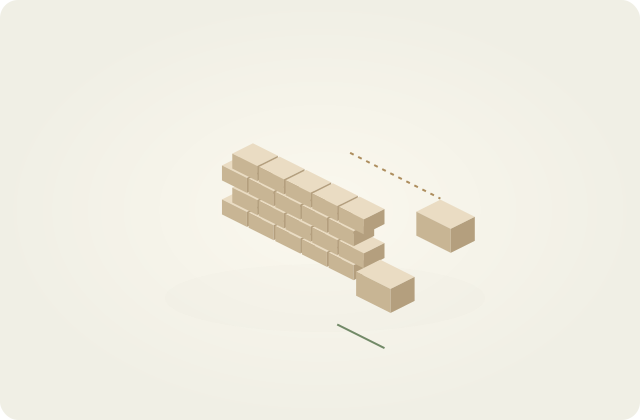
If the stone calculation gives 318 units, material cost is 318 multiplied by the supplier’s actual unit price. No invented price is supplied here. The quantity is calculated; the commercial quotation must come from your dated document. Different currencies cannot be added without a dated exchange-rate basis. Changing currency in the application clears earlier prices.
Labour, logistics and contingency
Enter labour, logistics and agreed additional costs separately from materials. In our simple model, base cost equals materials plus labour plus logistics. Contingency applies to that base, and tax applies to the base plus contingency. This is not tax advice: check the model against the contract and applicable tax treatment.
A reserve is not a guarantee against every concealed problem. Record why it exists and link spending to the change log. A price increase, extra work and correction of a defect are different events. They should not quietly disappear into a single allowance.
Coordinate the sequence
A general preparation sequence is an existing-condition survey, competent assessment of unknown or hazardous systems, agreed removal, concealed work, specified inspections, surface preparation and finishes. This is not a site-specific safe method statement. Agree each stage’s starting conditions and acceptance criteria with the contractor in writing.
For example, evidence of dripping or dampness should prompt investigation rather than simply being painted over. The EPA home-maintenance resource is additional reading about observing leaks. Its US product-label programme is not an Azerbaijani regulatory requirement.
Azerbaijan and international comparisons
Local quotations for Baku and other regions may involve different delivery, access and waste-removal arrangements. Use actual offers for amounts. A foreign estimate may offer a useful structure, but its labour rates, tax percentages and product prices are not local data. British HSE planning guidance is organisational reading rather than Azerbaijani contract law.
Questions and answers
Is the cheapest quotation the best value?
You cannot establish that without equivalent products, scope, inspections and warranty terms. Resolve the differences in a comparison table first.
What if quantities change after the agreement?
Record the reason, revised measurement, price and approval in a written change. Keep the earlier version so the difference can be checked.
References and scope
Check the original documents and their applicability to your work. Foreign requirements are not local regulations; external link availability was not tested in this build.
- HSE — Planning for construction work
- HSE — Domestic clients: roles and responsibilities
- US EPA WaterSense — Home maintenance